
Water-Damaged Drywall: Signs You Need Professional Drywall Repair
Water damage can affect more than the appearance of your walls and ceilings. Even a small plumbing leak or roof issue can leave behind stains, bubbling paint, weakened drywall, and damaged interior finishes.
For homeowners in Riverside, San Bernardino, Orange County, and the Greater Los Angeles area, identifying drywall damage early can help prevent a minor repair from becoming a larger renovation project.
At Quality Interiors, we provide professional drywall repair, drywall replacement, texture matching, and interior painting services to help homeowners restore damaged surfaces and achieve a clean, consistent finish.
If you’ve noticed discoloration on your ceiling, peeling paint, or a soft area on your wall, understanding the warning signs can help you determine when professional drywall repair may be necessary.
7 Signs Your Drywall May Have Water Damage
Water-damaged drywall doesn’t always look severely damaged at first. In some cases, the initial signs are subtle and become more noticeable over time.
1. Brown or Yellow Ceiling Stains
One of the most recognizable signs of water damage is a brown or yellow stain on the ceiling or upper wall.
These marks may appear after a roof leak, plumbing problem, or water intrusion from an adjacent room. Even if the surface appears dry, the source of the moisture should be identified before repairing the drywall.
Painting directly over a stain without addressing the underlying problem may lead to recurring discoloration or additional damage.
2. Bubbling or Peeling Paint
When moisture becomes trapped behind a painted surface, the paint may begin to bubble, blister, or peel away from the drywall.
This can happen on ceilings, bathroom walls, kitchen walls, and other areas exposed to moisture.
Before applying new paint, the affected surface should be evaluated to determine whether the drywall itself needs repair or replacement.
3. Soft or Swollen Drywall
Drywall exposed to moisture can lose strength, swell, or become soft.
If a wall or ceiling appears distorted or its surface has changed noticeably, avoid pressing on it or attempting to remove damaged material without understanding the extent of the problem.
Severely weakened ceiling drywall can present a falling-material hazard and should be assessed promptly.
4. Crumbling Edges or Damaged Seams
Water damage may cause drywall paper to deteriorate and seams to separate. You may also notice cracking joint compound, damaged corners, or areas where the finish no longer sits flat.
These issues can make the wall or ceiling look uneven and may require more than a simple coat of paint.
Professional drywall repair can address the damaged sections and prepare the surface for a suitable replacement finish.
5. Persistent Musty Odors
A musty smell can indicate a moisture problem behind a wall, above a ceiling, or in another enclosed area.
Although odor alone does not confirm mold, it is a reason to investigate possible moisture intrusion. If mold is suspected, appropriate assessment and remediation may be necessary before drywall repairs begin.
Simply covering the affected area with paint will not resolve an ongoing moisture problem.
6. Repeated Stains After Painting
Have you repainted a ceiling only to see the same stain return?
Recurring discoloration may indicate that the original moisture source was never fully resolved or that the damaged surface needs additional treatment or replacement.
A proper repair should address the condition of the drywall, not just its visible appearance.
7. Cracks or Sagging Ceiling Sections
Water-damaged ceiling drywall may develop cracks, bulges, or sagging areas as the material weakens.
These symptoms should be taken seriously. Keep people away from a visibly sagging ceiling and arrange for a qualified professional to assess it. If collapse appears imminent, leave the affected area.
What Causes Water-Damaged Drywall?
Several common household problems can contribute to damaged drywall.
- Plumbing leaks: Leaking supply lines, drainpipes, or plumbing connections can allow moisture to enter walls and ceilings.
- Roof leaks: Damaged roofing materials or flashing may allow rainwater to reach interior surfaces.
- Bathroom moisture: Poor ventilation or water escaping around fixtures can contribute to moisture-related deterioration.
- Appliance leaks: Washing machines, dishwashers, and refrigerators with water connections can cause hidden damage.
- Previous flooding: Water intrusion can affect drywall, insulation, and other materials inside wall cavities.
Homeowners in communities such as Riverside, Corona, Ontario, Rancho Cucamonga, Fontana, Chino Hills, Upland, Anaheim, Fullerton, and surrounding Southern California areas should address the source of water intrusion before investing in cosmetic repairs.
Can Water-Damaged Drywall Be Repaired or Does It Need Replacement?
The appropriate solution depends on the extent of the damage and the condition of the material.
A small, superficial area may be repairable if the drywall remains sound, dry, and free of contamination. More extensive damage may require removing and replacing affected sections.
A professional assessment can help determine the appropriate scope of work.
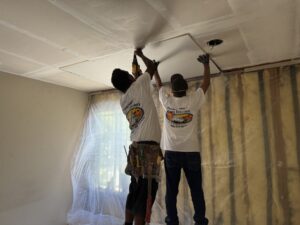
The process may involve removing damaged drywall, addressing affected joints, installing replacement material where necessary, applying joint compound, sanding, and preparing the surface for its final finish.
Where moisture or mold is involved, the underlying issue must be handled appropriately before closing up the wall or ceiling.
Why Texture Matching Matters After Drywall Repair
Repairing the damaged area is only one part of restoring the room.
Once the drywall has been patched or replaced, the repaired section may look different from the surrounding wall. This is especially noticeable when the existing surface has a distinctive texture.
Quality Interiors offers patch-and-match drywall repair and wall and ceiling texture services to help repaired areas blend with the existing finish.
Depending on the surface, the available options may include:
- Knockdown texture: A dimensional finish created by flattening sprayed texture.
- Orange peel texture: A subtle, lightly patterned finish.
- Splatter texture: A sprayed finish with a lighter or more pronounced pattern, depending on application.
- Smooth finish: A clean, minimal appearance that requires careful surface preparation.
Choosing the right texture helps create a more consistent result before the area is primed and painted.
Completing the Repair With Interior Painting
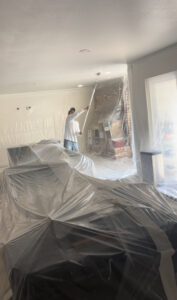
After the drywall has been repaired, finished, and allowed to dry appropriately, painting can help restore the room’s appearance.
The preparation process may include sanding, filling imperfections, cleaning the surface, priming where needed, and applying the selected paint finish.
Quality Interiors provides interior painting services that can complement drywall repair, allowing homeowners to coordinate related finishing work as part of the same project.
Professional Drywall Repair in Riverside, San Bernardino, Orange County, and Los Angeles
Water damage can affect homes of every age, and the best repair approach depends on the location, severity, and cause of the problem.
Quality Interiors provides drywall installation and repair, patch-and-match services, wall and ceiling texturing, acoustic ceiling removal, and interior painting throughout Riverside, San Bernardino, Orange County, and the Greater Los Angeles area.
Whether you’re dealing with a damaged ceiling in Rancho Cucamonga, peeling paint in Riverside, or a wall that needs patching and repainting in Orange County, our team can help evaluate your interior improvement project.
Need help with damaged drywall? Contact Quality Interiors today to request a free, no-obligation estimate.
If your project involves several affected areas, ask about combining drywall repair, texture matching, and painting to create a consistent finish throughout the room.
Frequently Asked Questions
Can water-damaged drywall be painted over?
Painting alone is not an appropriate solution if the drywall is wet, weakened, contaminated, or still exposed to the source of moisture. The underlying issue should be resolved before repairs and painting begin.
How do I know whether drywall needs to be replaced?
Swelling, crumbling, severe softening, extensive contamination, and significant structural deterioration may indicate that replacement is necessary. A professional assessment can help determine the scope of work.
Can you match the texture after repairing drywall?
Yes. Quality Interiors offers patch-and-match drywall repair and wall and ceiling texture services to help repaired areas blend with the surrounding finish.
Do you repair ceiling drywall?
Quality Interiors provides drywall repair services for walls and ceilings, including repairs associated with water damage.
Do you serve areas outside Riverside?
Yes. Quality Interiors serves Riverside, San Bernardino, Orange County, and the Greater Los Angeles area, including surrounding communities. Contact the team to confirm availability for your location.
Restore Your Walls and Ceilings With Quality Interiors
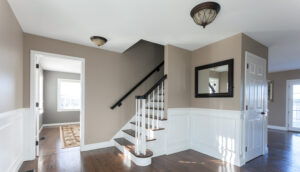
Damaged drywall can make an otherwise well-maintained home look unfinished. Addressing the moisture source, repairing the affected material, matching the existing texture, and completing the surface with paint can help restore a clean, consistent appearance.
Call Quality Interiors at 951-204-4535 to discuss your drywall repair project and request a free estimate.